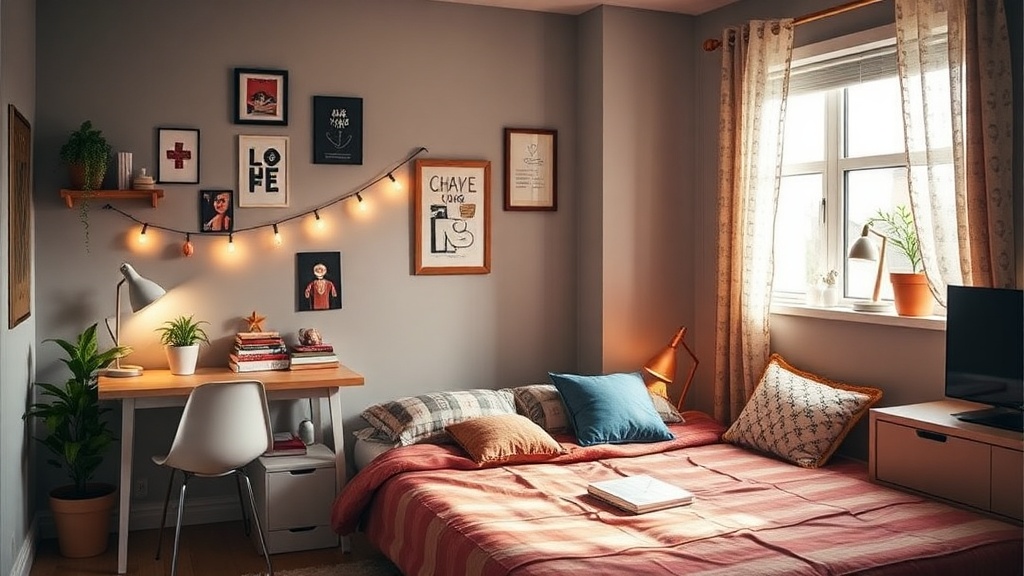
6 Clever Ways to Decorate Your Dorm Without Breaking the Bank

Warm Up with Fairy Lights
Add Life with Low-Maintenance Plants
Personalize with a Photo Wall
Use Command Hooks for Organization
Layer Textures with Throw Pillows
Repurpose Thrifted Finds
Are you staring at four beige walls and wondering how anyone is supposed to actually live in a room this small? Most college students face the same dilemma: you want a space that feels like a home rather than a sterile hospital ward, but your bank account says otherwise. This guide covers six practical, budget-friendly strategies to transform your dorm room using affordable decor, clever organization, and a bit of DIY creativity. Whether you're trying to make a tiny lofted bed feel cozy or just want to hide that ugly linoleum floor, these methods work without requiring a massive student loan drawdown.
How Can You Make a Small Dorm Room Feel Cozier?
The fastest way to make a small dorm feel cozy is to focus on soft textures and warm lighting. Standard dorm lighting—usually a single, harsh fluorescent bulb overhead—is the enemy of a good mood. Instead, layer in different light sources to create depth and warmth.
String lights are the gold standard here. You've seen them in every Pinterest board for a reason. They add a soft glow that makes studying at 2:00 AM much more tolerable. If you want something a bit more substantial, grab a small bedside lamp with a warm-toned LED bulb. Avoid the "daylight" or "cool white" bulbs; they make the room feel clinical. A small salt lamp or even a battery-operated candle can also add that much-needed amber hue.
Texture is your best friend when it comes to comfort. A chunky knit throw blanket from a place like Target can instantly soften the look of a rigid, metal dorm bed. Don't forget the floor. Most dorm floors are cold and uninspiring. A small, plush rug or even a faux-sheepskin rug can ground the room and make it feel finished. It's a small investment that pays off in how much you actually enjoy sitting on the floor to hang out with friends.
Pro-tip: If you're worried about the rug being a dust magnet, look for low-pile options that are easy to vacuum. You don't want to spend your entire Sunday cleaning up lint.
Where Should You Buy Cheap Dorm Decor?
You can find high-quality, low-cost dorm decor at thrift stores, online marketplaces, and big-box retailers. The key is knowing where to look for specific items so you don't overspend on things that only serve a temporary purpose.
I usually suggest a three-tier approach to shopping for your space. First, hit the thrift stores. This is where you find the "real" stuff—ceramic vases, vintage frames, or even unique coffee mugs. Second, use online marketplaces like Facebook Marketplace or even Depop for furniture or larger decor pieces. Third, use big-box retailers for the functional stuff. It’s much cheaper to buy a basic desk organizer from IKEA than to buy a "designer" version at a boutique shop.
| Category | Best Place to Shop | What to Look For |
|---|---|---|
| Textiles | TJ Maxx / Marshalls | Throw pillows, blankets, small rugs |
| Lighting | Amazon / Target | String lights, LED desk lamps |
| Art/Wall Decor | Thrift Stores / Etsy | Vintage prints, unique frames |
| Organization | IKEA / Container Store | Clear bins, desk organizers |
That said, be careful with "cheap" decor that is actually low quality. A $5 plastic plant might look terrible after two weeks, whereas a $15 faux plant from a thrift store might actually look decent. Quality over quantity is a rule that applies even when you're on a budget.
1. Master the Art of Wall Decor
Since you likely can't paint the walls (unless you want a very awkward conversation with your RA), you have to get creative with what you hang. Command Strips are essentially the most important tool in a college student's arsenal. They allow you to hang art without leaving permanent marks on the cinderblock walls.
Instead of buying expensive framed art, try these instead:
- Fabric Tapestries: These cover a huge amount of wall space for very little money. They also help dampen sound—a subtle plus if your roommate is a loud sleeper.
- Postcard Walls: Print out photos or collect postcards from your travels. Use a bit of washi tape to stick them up in a grid pattern. It looks intentional rather than messy.
- Vinyl Records: If you have a collection, leaning them against the wall or using small adhesive mounts adds a cool, personal touch.
The catch? Don't overdo it. A wall covered in twenty different types of things can end up looking cluttered rather than curated. Pick a color palette and stick to it.
2. Use Vertical Space for Storage
In a dorm, floor space is a luxury. If you keep everything on your desk or the floor, you'll run out of room by week three. You need to look up. Using your walls and the height of your furniture is the only way to survive a 10x10 room.
Pegboards are a massive win here. You can mount a small pegboard above your desk to hold pens, headphones, and even small plants. It keeps your workspace clear, which is a huge help when you're trying to stay organized during finals week. It also keeps your essentials within arm's reach.
Another great hack is the over-the-door organizer. Most people think these are just for shoes, but they are incredibly useful for toiletries, snacks, or even stationery. It’s a way to keep the "clutter" tucked away and out of sight.
3. Create a "Zones" System
Even in a tiny room, you should try to mentally and physically separate your "work" space from your "rest" space. If your bed is also your desk, the lines get blurry. This can lead to a cycle of procrastination because your brain doesn't know if it's time to sleep or time to grind through a paper.
You can create these zones using small items. A small rug under your desk can define the "office" area. A specific lamp used only during study hours can signal to your brain that it's time to focus. On the flip side, keeping your bed area strictly for relaxation—no laptops allowed—can actually improve your sleep hygiene. It might sound small, but these psychological cues are huge for maintaining a routine when your environment is cramped.
4. Bring the Outside In
Dorms can feel incredibly stagnant. There’s no fresh air, no natural sunlight (usually), and the air can feel a bit... heavy. Adding greenery can make a room feel more "alive."
If you have a window, get some low-maintenance plants. A Snake Plant or a Pothos are nearly impossible to kill, even if you forget to water them for a week. If you don't have much light, don't stress. High-quality faux plants from places like Wikipedia's entry on artificial plants (or just any home goods store) can provide the same visual benefit without the upkeep. Plants add a pop of color and a sense of calm that a plastic bin simply can't provide.
5. Upgrade Your Bedding (Within Reason)
Your bed is the centerpiece of your room. It’s the biggest object in the space, so it dictates the entire vibe. While you don't need a designer duvet, upgrading from a basic, thin sheet set to something with a bit more weight can change everything. A textured comforter or a linen-blend sheet set feels much more luxurious than standard cotton.
A quick comparison of bedding styles:
- The Minimalist: Solid colors, clean lines, one single throw blanket. Great for small rooms.
- The Maximalist: Multiple patterned pillows, layered textures, and a colorful quilt. Can feel cozy but risky in tight spaces.
- The Cozy Academic: Darker tones, heavy textures (like flannel or wool), and plenty of books on a nearby nightstand.
Just remember that if you're going for a "maximalist" look, you're adding more physical bulk to the room. If your dorm is already tiny, maybe stick to the minimalist approach with one or two "statement" pillows to keep things from feeling claustrophobic.
6. Use Mirrors to Trick the Eye
If you're feeling particularly cramped, a mirror is your best friend. Mirrors reflect light and create the illusion of more space. A full-length mirror leaning against a wall or even a few smaller circular mirrors can make a room feel significantly wider and brighter.
A full-length mirror is also practical for those "outfit check" moments before heading to a social event. Instead of buying an expensive, heavy floor mirror, look for lightweight options that you can easily move or pack up at the end of the semester. You can even find inexpensive mirror decals that stick directly to the wall, though the reflection might not be as clear as a glass version.