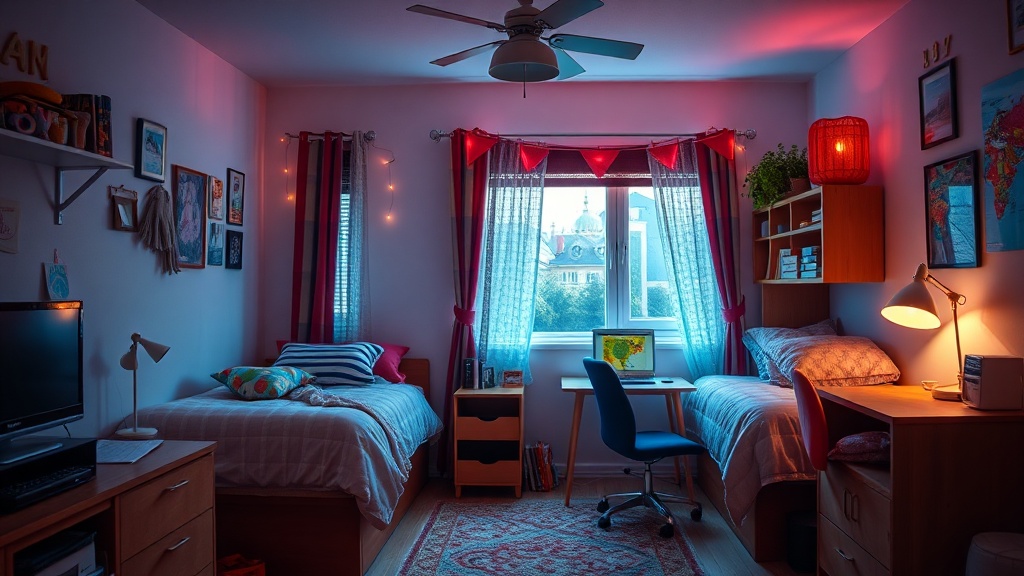
6 Ways to Make Your Dorm Room Feel Like Home

Layer Your Lighting
Add Some Greenery
Use Command Hooks for Everything
Bring in Textures with Rugs and Throws
Display Your Photos
Scent Without the Flame
Most students believe that making a dorm room feel like "home" requires a massive budget or a complete furniture overhaul. This is a misconception. In reality, the sterile, institutional feel of a university residence hall is a product of standardized lighting and utilitarian surfaces, not a lack of decor. Transforming a cramped 12x15 space into a personal sanctuary is about strategic layering—specifically through lighting, texture, and scent—rather than just buying more stuff. This guide provides six practical, budget-friendly methods to reclaim your space and create an environment that supports both your mental well-being and your academic productivity.
1. Replace Overhead Fluorescents with Layered Lighting
The quickest way to make a dorm room feel like a hospital wing is to rely solely on the built-in overhead fluorescent lights. These lights emit a harsh, blue-toned glare that can increase cortisol levels and disrupt your circadian rhythm, making it harder to wind down after a late-night study session. To create a more inviting atmosphere, you must introduce multiple light sources at different heights.
Start with a floor lamp in a corner to soften the edges of the room. A tripod lamp with a linen shade provides a much warmer glow than a standard desk lamp. For your desk area, a task lamp like the IKEA Tertial offers adjustable lighting that is functional for writing but less jarring than the ceiling light. To add a sense of depth, use LED light strips or "fairy lights" along the perimeter of your ceiling or behind your headboard. If you want to add a sophisticated touch, a small salt lamp provides a low-intensity amber light that is perfect for late-night reading without the need for a bright screen.
- Warm White Bulbs: Always look for bulbs labeled "Warm White" (2700K to 3000K) rather than "Daylight" (5000K+) to avoid the clinical feel.
- Clip-on Lights: If you have a lofted bed, a clip-on reading light is essential for reading without waking up your roommate.
- Smart Bulbs: Using a Philips Hue bulb allows you to change the color temperature via your phone, transitioning from bright white for studying to soft amber for relaxing.
2. Introduce Soft Textures to Counteract Hard Surfaces
Dorm rooms are overwhelmingly composed of hard, non-porous surfaces: laminate desks, metal bed frames, and linoleum floors. These materials absorb sound poorly and feel cold to the touch. To combat this, you need to introduce "soft goods" that add acoustic dampening and visual warmth.
The most impactful addition is a large area rug. A rug does more than just cover a cold floor; it defines the "living" area of your room and helps muffle the sound of footsteps or dropped books. Look for a low-pile rug or a washable option like the Ruggable line, which is practical for small spaces where cleaning can be difficult. Layering a faux-sheepskin rug over a standard cotton one can also add a sense of luxury to your seating area.
Don't overlook your bedding. While a standard twin XL sheet set is functional, adding a weighted blanket or a textured throw pillow can make your bed feel like a destination rather than just a place to sleep. A chunky knit throw or a velvet pillow cover adds a tactile element that makes the room feel curated rather than just "furnished."
3. Create a Dedicated Workspace and Mental Boundary
One of the biggest challenges in a small dorm is the blurring of lines between "work mode" and "rest mode." If you are studying on your bed, your brain begins to associate your sleeping area with stress, which can lead to insomnia. To make your room feel like a home rather than just a study cubicle, you must create a distinct physical boundary for your academics.
Even if you only have a small desk, use organizational tools to keep your academic life contained. A desk organizer or a rolling cart, such as the Target Brightroom utility cart, can house your notebooks, pens, and laptop chargers. When you are finished with your work, clear the surface. A clean desk signals to your brain that the workday is over. If you find yourself struggling to stay focused in such a confined space, you might want to look into why the Pomodoro Technique works to help manage your time effectively within your designated workspace.
If space permits, use a small bookshelf or a tall plant to act as a "room divider" between your desk and your bed. This visual separation is crucial for maintaining a sense of domesticity in a multipurpose room.
4. Use Scent and Air Quality to Set the Mood
Standard dorm rooms often smell like a mix of stale laundry, cleaning supplies, and old takeout. Scent is one of the strongest triggers for memory and emotion, and using it strategically can make your room feel much more personal. However, most universities strictly prohibit candles due to fire hazards, so you must be creative with alternatives.
An essential tool for any student is an essential oil diffuser. A ceramic or ultrasonic diffuser (like those from Vitruvi or more affordable options on Amazon) allows you to use scents like lavender for sleep or peppermint for focus. Unlike heavy air fresheners, essential oils provide a subtle, natural scent that doesn't feel overwhelming in a small room.
Additionally, consider air quality. Dorm air can become stagnant quickly. A small, sleek air purifier can remove dust and allergens, making the air feel "crisper." If your school allows it, a small desktop fan can also help with air circulation, preventing the room from feeling stuffy during high-stress exam weeks.
5. Personalize Through Curated Wall Art
Blank, white walls are the hallmark of institutional living. To make the space feel like yours, you need to fill that vertical space. However, avoid the mistake of taping up dozens of loose, single photographs, which can look cluttered and messy. Instead, aim for a "gallery" approach.
Use command strips or adhesive putty to hang framed art. Frames add a sense of permanence and intentionality that a taped-up poster lacks. You can find affordable frames at Target or TJ Maxx that match your specific aesthetic, whether it's mid-century modern, minimalist, or maximalist. If you are on a strict budget, even high-quality prints from Etsy can be framed to elevate the look of your room.
- Fabric Wall Hangings: A large tapestry or a textile wall hanging can cover a large amount of wall space quickly and adds much-needed texture to the room.
- Floating Shelves: If your housing agreement allows for damage-free shelving (like the Command brand), use them to display books, small plants, or ceramics.
- Polaroid Strings: For a more casual look, stringing up photos with small wooden clips can create a personal touch without looking disorganized.
6. Bring in Natural Elements
The lack of nature in a high-rise dorm or a basement residence hall can lead to a feeling of isolation. Incorporating greenery is one of the most effective ways to breathe life into a room. Plants do more than just look good; they improve air quality and provide a sense of calm.
If you are a beginner or are worried about your "black thumb," start with low-maintenance plants that thrive in low-light environments. A Snake Plant (Sansevieria) or a ZZ Plant can survive even if you forget to water them for a week or two. If your dorm has almost no natural light, high-quality faux plants from stores like West Elm or even IKEA can provide the same visual benefit without the maintenance.
Beyond plants, look for natural materials in your decor. A wooden tray for your desk, a jute basket for your laundry, or a stone coaster for your coffee mug adds an organic element that softens the industrial edges of your dorm furniture. These small touches ground the space and make it feel less like a temporary station and more like a permanent home.