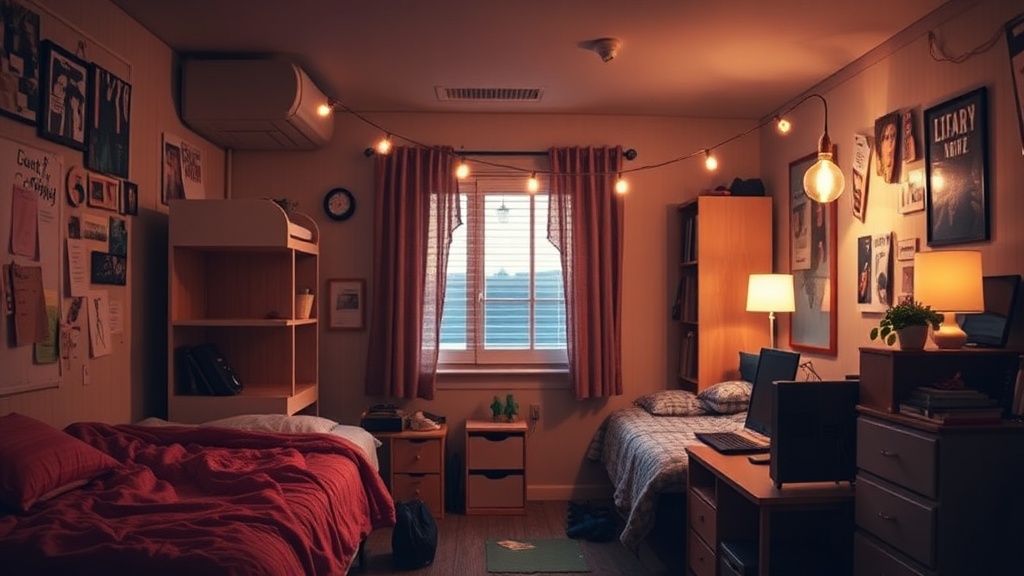
Finding Your Focus in a Noisy Dorm Room

Research from the Journal of the American Medical Association suggests that even brief exposure to background noise can significantly impair cognitive performance and memory retention. For college students living in high-density housing, this isn't just a minor annoyance; it is a structural barrier to academic success. Whether it is the rhythmic thud of a neighbor’s bass through the floorboards, the constant chatter in the hallway, or the hum of a communal HVAC system, ambient noise disrupts the deep work required for complex studying. This guide provides a practical toolkit for auditing your environment, selecting the right auditory tools, and implementing psychological boundaries to reclaim your focus in a crowded dorm setting.
Audit Your Acoustic Environment
Before investing in expensive hardware, you must identify the specific type of noise that is disrupting your workflow. Not all sounds are created equal, and your solution depends entirely on the frequency of the disturbance. Use a free mobile application like Decibel X or NIOSH Sound Level Meter to measure the ambient noise levels in your room during peak hours. This data will tell you if you are fighting high-frequency sounds (like voices or clicking keyboards) or low-frequency sounds (like heavy footsteps or distant music).
Categorize your disruptions into three distinct types:
- Intermittent Disruptions: Sudden, unpredictable sounds like a door slamming or a loud laugh in the hallway. These are the most damaging to focus because they trigger a startle response.
- Constant Ambient Noise: Steady sounds like a loud fan, a nearby construction site, or a humming refrigerator. These are easier to mask but can cause fatigue over long periods.
- Rhythmic Disturbances: Repetitive sounds like a neighbor's drum machine or a rhythmic tapping. These are particularly difficult to ignore because the brain naturally attempts to track the pattern.
Hardware Solutions for Sound Isolation
Once you have identified your primary enemy, you need the right gear to combat it. While standard earbuds might suffice for a quick podcast, they often fail during a three-hour study session. For serious academic work, you need a tiered approach to hardware.
Active Noise Canceling (ANC) Headphones
If your budget allows, high-quality Active Noise Canceling headphones are the gold standard. Unlike passive isolation, ANC uses microphones to pick up external noise and create an "anti-noise" signal to cancel it out. For students, the Sony WH-1000XM5 or the Bose QuietComfort series are the industry leaders for a reason: they excel at neutralizing low-frequency drones and engine hums. If you are on a tighter budget, the Soundcore by Anker Life Q30 offers a highly effective ANC feature for a fraction of the price of premium brands.
High-Fidelity Earplugs
If you are studying in a library or a quiet lounge where wearing large headphones feels socially awkward or physically uncomfortable, consider high-fidelity earplugs. Brands like Loop Experience or Flare Audio design earplugs that do not just muffle sound, but actually reduce decibel levels across the entire frequency spectrum. This prevents the "underwater" sensation of cheap foam plugs while still providing enough attenuation to keep you in the zone. This is particularly useful when you need to remain somewhat aware of your surroundings, such as in a common room.
White, Pink, and Brown Noise Generators
Sometimes, total silence is actually more distracting because it makes every tiny sound feel amplified. Instead, aim for a "sound blanket."
- White Noise: Contains all frequencies at equal intensity. It is great for masking high-pitched voices.
- Pink Noise: Has more power at lower frequencies, creating a deeper, more natural sound like steady rain.
- Brown Noise: Much deeper and bass-heavy, similar to a low roar or distant thunder. This is the most effective for masking heavy footsteps or low-frequency vibrations from a neighbor's music.
Environmental Modifications
You can also use physical objects to dampen the sound waves before they reach your ears. This is often referred to as "acoustic treatment," and while you shouldn't turn your dorm into a recording studio, small changes make a difference.
Soft Surfaces are Your Best Friend: Hard surfaces like cinderblock walls and linoleum floors reflect sound, causing it to bounce and amplify. Adding a heavy area rug (even a cheap one from Target or IKEA) can significantly reduce the "echo" in a small room. Similarly, hanging heavy fabric tapestries or even thick curtains over your walls can absorb high-frequency sounds coming from adjacent rooms.
The Power of Mass: If sound is leaking through a specific wall—perhaps a neighbor's gaming setup—place your heaviest furniture against that wall. A full bookshelf or a heavy wardrobe acts as a physical barrier that adds mass, making it harder for sound vibrations to pass through. This is a practical way to create a "quiet zone" within your limited square footage.
Psychological Strategies for Deep Work
Even with the best headphones, your brain can still be "distracted" by the perception of noise. You must train your brain to treat the noise as non-essential data. This requires a combination of ritual and strict boundary setting.
The "Focus Trigger" Ritual
Create a specific sensory cue that tells your brain it is time to work. This could be a specific playlist, a certain scent (like a citrus candle), or even a specific desk lamp. When you engage this trigger, you are signaling to your nervous system that the external environment is no longer the priority. If you struggle with starting these sessions, try the five-minute rule to lower the barrier to entry.
The "Do Not Disturb" Social Contract
Noise in a dorm is often social. Your roommates or neighbors may not realize that you are in a "deep work" phase. You need to communicate your needs clearly and visually. A simple sign on your door or a specific colored light (like a Philips Hue bulb set to red) can signal to your floor-mates that you are in a high-focus period and should not be interrupted. This prevents the most jarring type of noise: the unexpected knock on the door or the "hey, do you have a sec?" interruption.
Scheduled Cognitive Breaks
Trying to maintain intense focus for four hours straight in a noisy environment is a recipe for burnout. Use the Pomodoro Technique: 25 minutes of intense, noise-masked study followed by a 5-minute break. During your break, take your headphones off and move to a different environment—even if it's just a quick walk to the communal sink or a quick stretch in the hallway. This "sensory reset" prevents the mental fatigue that comes from constantly fighting against ambient noise.
Summary Checklist for a Quieter Study Session
- Measure: Use a decibel meter app to identify your noise type.
- Equip: Select ANC headphones for low frequencies or high-fidelity earplugs for general attenuation.
- Mask: Layer your audio with Brown or Pink noise to create a consistent sound floor.
- Dampen: Use rugs, tapestries, or heavy furniture to absorb sound waves.
- Signal: Use a visual cue (like a light or sign) to establish social boundaries with roommates.