The Sacred Irrationality of Pre-Exam Rituals

I Counted 14 Separate Pre-Exam Rituals in One Hallway
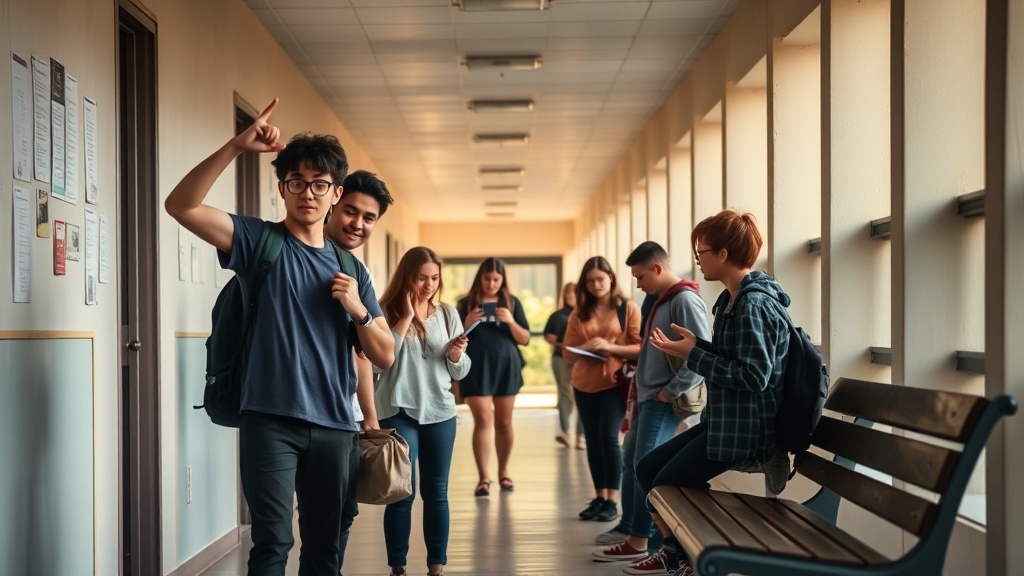
It was 8:47 AM on a Tuesday, and I was walking to my media ethics final when I saw it all unfold in the span of about forty feet: a girl doing what I can only describe as a power pose against a wall (hands on hips, chest out, main character energy), a guy muttering something to himself while clutching a specific blue pen he clearly believes contains the answers to macroeconomics, two people doing some kind of synchronized breathing exercise on a bench, and someone eating a banana with the intensity of an Olympic athlete preparing for the 100-meter dash.
Campus before exams is a theater of private irrationality made public, and I find it genuinely fascinating.
Nearly a third of college students admit to having some kind of exam superstition or pre-test ritual. I'd argue the actual number is closer to 100%, because even the people who say "I don't do anything special" are lying. They absolutely have a specific seat in the testing room. They absolutely wore those same jeans to the midterm they aced. They are simply in denial.
The Taxonomy of Exam Rituals
After three and a half years of observation — and, fine, participation — I've identified distinct categories of pre-exam behavior that repeat across every campus I've talked to people from.
The Object Worshippers. These are your lucky pen people, your specific-hoodie people, your "I have to use this exact notebook" people. My roommate sophomore year refused to take any exam without a particular hair tie on her left wrist. It was green. It was disgusting by November. She got a 3.8 that semester, so who am I to judge.
What's interesting is the object almost never has a logical connection to academic success. It's not like they're carrying a calculator they trust. It's a scrunchie. It's a particular pair of socks. One person I know brings a small rubber duck to every exam — and before you ask, no, they're not a CS major doing rubber duck debugging. They're a poli sci student. The duck just "feels right."
The Body Ritualists. Power poses, specific stretches, a particular order in which they crack their knuckles. I talked to someone at Northeastern who does superhero poses before every final — hands on hips, chest forward, the full Wonder Woman. Research actually supports this one somewhat (there's a whole TED talk about it that your psych professor has probably shown you), but the ritualistic aspect goes way beyond what the science says. It's not "I do this because it's been shown to slightly increase confidence." It's "I do this because the one time I didn't, I got a C+ on organic chemistry."
The Statue Touchers. Every campus has The Thing You Touch. At Northeastern, students rub the nose of King Husky. At other schools, it's a specific statue, a particular rock, a certain spot on a wall. NYU doesn't really have a single consensus lucky statue — which I think says something about us as a student body — but I've seen people touch the Bobst Library lion handles with suspicious reverence during finals week. Nobody taught us to do this. It just... happened, across generations of students, like a folk religion that spreads through observation rather than instruction.
The Routine Fortifiers. These aren't superstitious people, per se. They're people who become aggressively normal before exams. Same breakfast. Same route to class. Same playlist. Same seat at the same coffee shop at the same time. The ritual isn't magical thinking — it's environmental control. If everything around them is identical to when they studied, maybe their brain will perform identically to when they studied. This one is actually backed by something called context-dependent memory, and it's probably the most rational of all the rituals, which means its practitioners are the most insufferable about explaining it.
The Social Dynamics Nobody Talks About
Here's what actually interests me about exam rituals: they're one of the only areas of college life where we collectively agree not to judge each other.
Campus culture is otherwise a nonstop evaluation engine. We judge outfits, study habits, social media presence, what someone orders at the dining hall, which library floor they sit on. But exam rituals? Total amnesty. You could walk into a final wearing a tinfoil hat and carrying a Build-A-Bear and nobody would say a word. We'd just assume it worked for you on the midterm.
This is partly because everyone has their own weird thing and calling someone else out would invite scrutiny on your own ritual. It's mutually assured embarrassment. But I think it's also because exams are one of the few remaining spaces where the performance gap between "trying hard" and "not trying" is genuinely visible, and that vulnerability creates a temporary social ceasefire.
The week before finals, the usual campus hierarchies collapse a little. The person who always seems effortlessly put together is suddenly wearing the same hoodie for the third day. The guy who never talks in class is now the one explaining concepts to a study group. Exam rituals are just the most visible symptom of this broader temporary restructuring where we all silently acknowledge that we're all just trying to survive this.
When Rituals Get Weird (and When They Get Concerning)
There's a line between a harmless ritual and something that starts to look like anxiety wearing a costume. And I think we don't talk about that line enough.
If your ritual is "I always study at the same desk" — that's a preference. If your ritual is "I cannot take the exam if I don't study at that specific desk, and I once had a panic attack when someone was sitting there" — that's worth exploring with someone who has a degree on their wall.
A survey from Cherwell found that about a third of students have exam superstitions, but buried in the responses was a more uncomfortable truth: some students described their rituals in language that sounded less like quirky habits and more like compulsive behaviors. "I have to eat the same thing or I feel wrong." "If I don't do my routine, I know I'll fail." That certainty — the absolute conviction that breaking the ritual guarantees failure — is where superstition stops being cute.
I'm not a psychologist. But I've watched enough friends spiral during finals to know that the culture of "haha, we're all so quirky with our exam rituals" can sometimes provide cover for anxiety that actually needs attention. The humor is the camouflage.
My Own Rituals (Because I'd Be a Hypocrite Not to Admit This)
Fine. I'll do it.
I have a specific order I get ready in on exam mornings. Shower first, then coffee, then I re-read my notes exactly once — not twice, not skimming, exactly once — then I pick my outfit, which must include something with pockets because I need somewhere to put my hands while I wait outside the exam room. I listen to the same playlist on the walk over. It's 22 minutes long. If I arrive and the playlist isn't done, I walk slower. If it finishes before I get there, I walk faster. This makes no sense. I know this makes no sense. I have done it for every exam since sophomore year.
Also, I write my name on the exam booklet in a very specific way. First name, pause, last name. If I write them too quickly — if the pen doesn't leave the paper between Zara and Imani — I have to cross it out and do it again. I have no explanation for this. I got an A- on the first exam where I did it, and now it's locked in forever.
This is what rituals do. They give you the illusion of control in a situation where you have very little. You studied or you didn't. You know the material or you don't. But by adding structure to the chaos of exam morning — by making the uncontrollable feel controlled — you get to walk into that room feeling like you did everything you could. Even the irrational parts. Especially the irrational parts.
The Ritual Economy
There's actually a whole micro-economy around exam superstitions that nobody tracks. The specific brand of energy drink that becomes "the exam drink" for a friend group. The coffee shop that becomes sacred ground because someone got a 97 after studying there once. The particular flavor of gum that one person chews during every test until their entire section of the exam room smells like spearmint.
Companies know this. There's a reason certain energy drink brands market specifically to college students during finals season. They're not just selling caffeine — they're selling ritual. That Monster or Celsius isn't just a beverage; it's a psychological anchor. "I always drink this before exams" is a sentence that marketing departments have spent millions engineering, and we've all said it like it was our own idea.
The most fascinating version of this I've seen is the communal ritual — when an entire study group adopts the same superstition. A friend's accounting study group decided that they all had to eat at the same ramen place the night before their final. This started as a coincidence (they were all hungry and someone suggested ramen), became a tradition (they went back before the next exam and also did well), and is now essentially law (missing ramen night would be a social betrayal on par with not showing up to someone's birthday). The ramen place has no idea they've become a temple.
We are, all of us, deeply weird about exams. And I think that's actually one of the more honest things about college. For all the curated Instagram posts and carefully maintained social personas, exam week strips us down to our most superstitious, most anxious, most human. You can learn more about someone from their pre-exam ritual than from their entire social media presence.
Now if you'll excuse me, I need to go find my specific pen. I have a media law final in 36 hours, and I refuse to start studying until I'm holding it.