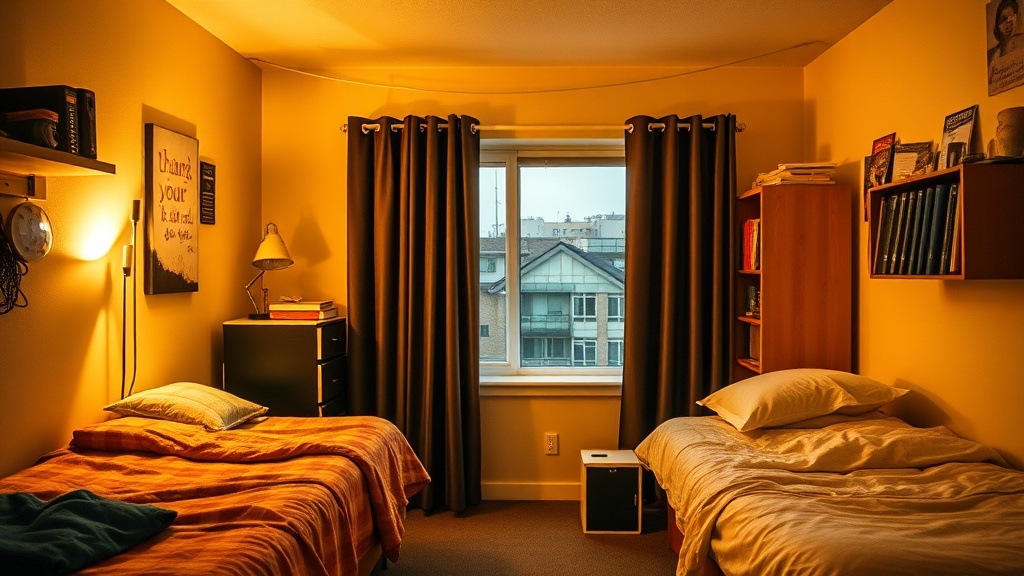
The Ultimate Guide to Thriving in Your First Year of College Dorm Life

The transition to college dorm life hits harder than most expect. This guide covers everything needed to survive and actually enjoy freshman year in the dorms — from roommate negotiations and space hacks to meal planning and mental health strategies. Whether moving across the country or commuting from the next borough, these tactics help turn a cramped cinderblock room into a functional home base for the next nine months.
What Should You Actually Pack for Dorm Life?
Start with the absolute basics — everything else can be ordered later. Most dorms supply a twin XL bed, desk, chair, and dresser. That's it.
Here's what experienced students swear by:
- Bed risers with outlets — create storage space underneath while adding much-needed plugs
- A shower caddy that drains (the InterDesign Orbz works well) — communal bathrooms mean carrying everything
- Command strips in bulk — most dorms ban nails, tape, and tacks
- A real desk lamp — overhead lighting in dorms is notoriously harsh
- Earplugs and a sleep mask — your roommate's schedule won't match yours
The temptation to overpack is real. That said, resist bringing high school memorabilia, excess clothing, or furniture. Space is tight — usually under 150 square feet shared between two people. Buy a Honey-Can-Do collapsible storage ottoman for seating that doubles as a bin. Ship bulky items through Amazon directly to your campus mailroom instead of cramming the family car.
Worth noting: check your school's specific prohibited items list. Most ban candles, hot plates, and extension cords. A Conair Fabric Defuzzer costs $15 and keeps clothes looking fresh without an iron.
How Do You Deal with a Difficult Roommate?
Set boundaries within the first 72 hours — before bad habits solidify into resentment.
The roommate agreement most RAs force you to sign? Actually useful. Don't treat it as busywork. Cover these specifics:
- Guest policies — how much notice? Overnight guests allowed?
- Quiet hours — weekdays versus weekends
- Food sharing — what's communal, what's off-limits
- Temperature preferences — the classic thermostat war
- Cleaning responsibilities — who takes out trash, vacuums, wipes surfaces
Communication matters more than compatibility. Two messy people who talk openly fare better than one neat freak and one slob who never speak. Use GroupMe or a shared Google Doc for passive-aggressive-free coordination.
The catch? Some roommate conflicts can't be solved. If you've had three honest conversations and nothing changes, document everything and approach your RA. Most schools allow room changes after the second week of classes — spaces open up as students drop out or transfer. Don't suffer in silence for an entire semester.
Here's the thing: you don't need to be best friends. Civil coexistence is the goal. Respect beats friendship every time.
What's the Best Way to Eat Healthy in a Dorm?
Get creative with limited appliances and avoid the "freshman fifteen" trap through planning, not willpower.
Most dorms allow microwaves and mini-fridges up to specific wattage. The Danby Designer 4.4 Cu. Ft. Mini-Fridge fits most dorm specifications while holding enough for a week's worth of groceries. Pair it with a Dash Mini Rice Cooker — technically not a hot plate, usually allowed, and capable of cooking far more than rice.
| Meal Type | Requires | Examples | Cost per Serving |
|---|---|---|---|
| Breakfast | Microwave only | Overnight oats, scrambled eggs in mug | $1.50 - $2.50 |
| Lunch | Mini-fridge + microwave | Rotisserie chicken wraps, hummus plates | $3.00 - $4.50 |
| Dinner | Rice cooker allowed | Steamed veggies + quinoa, pasta | $2.50 - $4.00 |
| Snacks | No appliances | Nuts, apples, protein bars | $1.00 - $2.00 |
The dining hall is convenient — too convenient. Most universities post nutrition information online through campus dining portals. Check it. That "healthy" grilled chicken sandwich? Often packs 900 calories with sauce and cheese.
Stock your mini-fridge with Greek yogurt, baby carrots, hummus, and pre-cut fruit. Keep Kind bars or RXBARs in your backpack for 3 PM crashes. A $20 BlenderBottle makes protein shakes that substitute for skipped meals during exam weeks.
How Do You Actually Make Friends in a Dorm?
Show up consistently to low-pressure shared spaces — lounges, laundry rooms, study nooks — and let proximity do the work.
The forced socialization of orientation week fades fast. Real friendships form through repeated, casual encounters. Leave your door open when studying (if safe). Sit in the common room instead of burying yourself in your bed. Compliment someone's laptop stickers — it's the modern equivalent of asking about a band t-shirt.
Floor events — movie nights, pizza study breaks — might seem corny. Go anyway. The people who show up are the ones actually looking to connect. That girl from your 8 AM who always sits alone? She's probably hoping someone talks to her.
Join at least one organization by week three. Not ten — that's resume-padding and burnout territory. One genuine commitment beats scattered half-presences. Check your school's student activities database (usually through the student affairs office) for clubs matching actual interests, not "what looks good."
That said — quality over quantity. Three solid friends who've got your back matter more than fifty Instagram followers from orientation. The loneliness hits everyone, usually around week six when the novelty wears off. That's normal. It passes.
How Do You Stay Sane Academically?
Treat your dorm room as a sleep space, not a study space — your brain needs environmental cues to switch modes.
The desk in your room is a trap. Too close to the bed. Too many distractions. Libraries exist for a reason. Even a coffee shop — Blue Bottle if you want quiet, Starbucks for white noise — puts you in work mode faster than staring at the same four walls.
Create a Sunday ritual. Review the week's assignments. Block specific times in Google Calendar (color-code by class). Prep snacks, charge devices, lay out clothes. The week starts Sunday evening, not Monday morning.
Office hours aren't just for struggling students — they're for smart students who want letters of recommendation later. Go early, go often. Introduce yourself to professors in week two, not week twelve when you're desperate for an extension.
Sleep deprivation isn't a badge of honor. It's a cognitive impairment equivalent to being drunk. The library at 2 AM looks productive — it's usually just performative. Seven to eight hours makes the other sixteen actually functional.
Mental Health: When to Push Through vs. When to Get Help
College counseling centers are overwhelmed — book appointments early and use other resources while waiting.
The adjustment period is rough. Homesickness, imposter syndrome, social anxiety — most students experience all three. Give it six weeks. If you're still crying daily, can't sleep, or skipping classes, that's beyond normal adjustment.
Most universities offer free counseling (capped at 8-12 sessions). Waitlists stretch long — put your name down before you "need" it. Meanwhile, resident advisors receive basic mental health training. They're not therapists, but they're confidential reporters (meaning they won't share unless you're in danger) and can point you toward resources.
Apps help bridge gaps. Headspace and Calm offer student discounts. Crisis Text Line (text HOME to 741741) provides 24/7 support. Many schools partner with TimelyCare for virtual therapy sessions.
Build a support system outside your dorm. A professor who knows your name. A staff member from the cultural center. Someone from back home who checks in weekly. Isolation kills — connection heals.
Making This Space Yours
The cinderblock walls and industrial carpet feel institutional because they are. That's the point. Everyone starts from the same blank slate.
Add texture through textiles — a throw blanket, a mix (wait, scratch that — wall hangings work better), fairy lights if allowed. Plants that survive dorm conditions: pothos, snake plants, ZZ plants. They forgive missed waterings.
Photos matter. Not just the glossy Instagram highlights — the messy, real moments. The friend who makes you laugh until your ribs hurt. The street where you grew up. Reminders that you existed before college and will exist after.
Your first dorm room is temporary. Nine months, maybe less if you transfer or move off-campus. But the systems you build — the communication habits, the study routines, the self-care practices — those last. Start building them now.